
Every Tanzania safari operator will happily sell you a trip at whatever budget you name. What they won’t always tell you upfront is exactly what changes as the price goes up — and, more importantly, what doesn’t change at all. This guide walks through the real differences tier by tier, so you can decide where your money actually matters to your experience and where it’s simply buying you a level of comfort you may not personally need.
What Stays the Same Across All Tiers
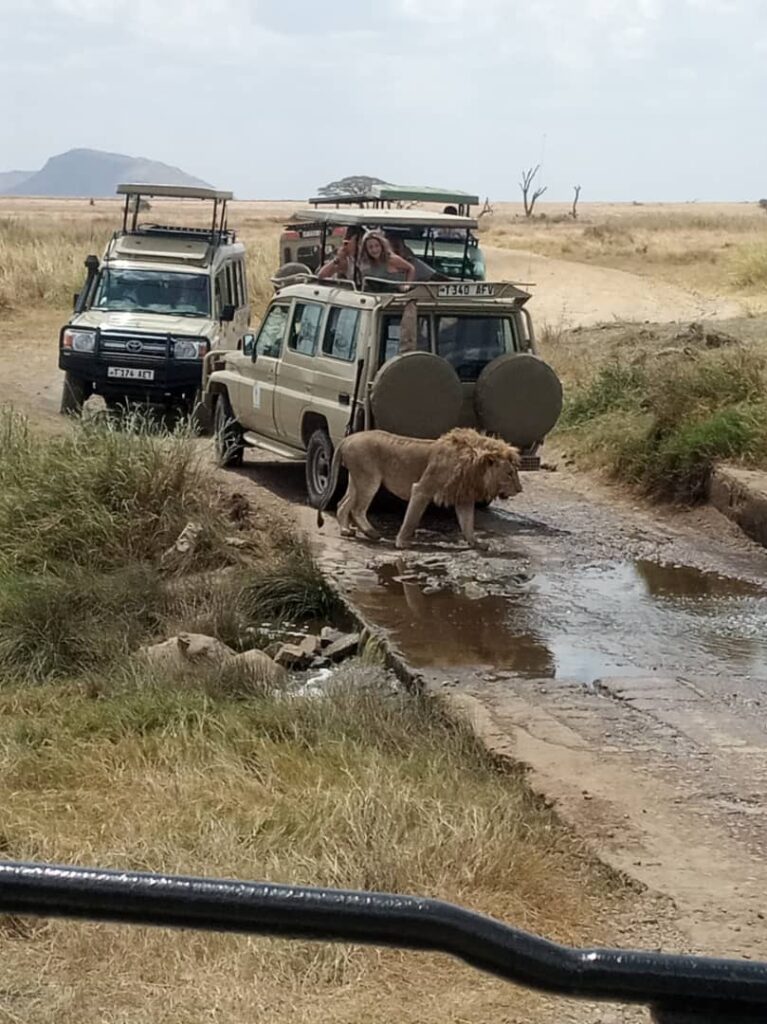
This is worth stating clearly upfront, because it’s the part most marketing glosses over: the wildlife doesn’t know your budget. A lion resting under an acacia tree in Ngorongoro Crater looks exactly the same from a budget camping vehicle as it does from a luxury fly-in camp’s private vehicle parked right beside it. Park entrance fees are identical regardless of which operator you book with, since they’re set entirely by the Tanzanian government and apply uniformly. Guide licensing requirements apply equally to every legal operator, meaning a budget operator’s guide has passed the same certification process and knowledge exam as a luxury operator’s guide.
If your primary goal is seeing the Big Five and, season permitting, witnessing the Great Migration, a well-run budget safari can deliver that just as reliably as a luxury one can. What changes as you move up through the price tiers is essentially everything around the wildlife viewing itself: your vehicle setup, your accommodation, your food, your level of privacy, and how much driving and waiting you personally have to tolerate along the way.
It’s also worth noting that the parks themselves impose the same rules on every vehicle regardless of price tier: speed limits, off-road driving restrictions, and distance-from-wildlife guidelines apply equally to a $150-a-day budget vehicle and a $1,500-a-day luxury vehicle. Rangers don’t treat luxury guests differently from budget guests when it comes to park regulations, which reinforces just how much of the price difference lives outside the actual wildlife-viewing experience itself and inside the surrounding comfort and service layer.
Vehicles: Shared vs Private
Budget safaris typically group unrelated travelers into a single shared vehicle to split costs, usually 5 to 7 people who are meeting each other for the very first time on day one of the trip. This works out fine in the large majority of cases, especially since most people booking a safari share broadly similar priorities and enthusiasm levels, but it does occasionally mean compromises: someone in the group always wants to stay longer at a particular sighting while someone else is restless and ready to move on to find something new.
Mid-range and luxury safaris use a private vehicle booked exclusively for your own party, meaning your guide adjusts the entire day around what your specific group wants to see, with no need to negotiate timing or routes with strangers who happen to share your vehicle. This is arguably the single biggest quality-of-life difference between budget and the higher tiers — more so, in the experience of many repeat safari travelers, than the accommodation difference that gets talked about more often.
One important note that applies across every tier without exception: all reputable operators use proper 4×4 Land Cruisers with pop-up roofs for game viewing, and this genuinely isn’t a place to cut corners regardless of your overall budget. The terrain in parks like Serengeti and Ngorongoro requires real 4-wheel drive capability, especially during the wet season when roads can become genuinely difficult even for well-equipped, well-maintained vehicles. If an operator ever quotes you a standard 2-wheel-drive minivan for a multi-park safari, treat that as a red flag regardless of how attractive the price looks, since it usually signals corners being cut somewhere important.
Accommodation: Camping, Tented Camps, and Lodges
Budget tier accommodation means public campsites shared with other groups, with communal toilet and shower blocks that vary in quality depending on the specific site and how well-maintained it happens to be. It’s an authentic, social experience — you’ll likely end up chatting with travelers from entirely different groups around a shared campfire in the evening — but it’s genuinely not private, and hot water isn’t always guaranteed every single night of your trip.
Mid-range tier moves you into permanent tented camps or basic lodges: a real bed, an en-suite bathroom, and generally reliable electricity and hot water, though without significant frills beyond that solid baseline. Luxury tier means private tented camps or individually designed lodge rooms, often featuring plunge pools, premium furnishings, and sometimes locations directly inside the park boundary itself rather than outside the entrance gate, which meaningfully improves your odds of wildlife sightings right from camp, sometimes even from your own private deck.
One thing worth knowing that catches some travelers off guard: some “luxury” camps sit nearly empty outside peak migration season, while budget campsites can actually be quite crowded even in low season, since they’re shared simultaneously across many different operators. If solitude specifically matters to you as part of your trip, ask directly about camp capacity and current expected occupancy rates rather than relying solely on the star rating or the glossy marketing photos on a website.
One thing worth understanding that mid-range and luxury accommodation is not a single uniform category — there’s real variation within each tier. A mid-range tented camp with 12 rooms and a mid-range lodge with 60 rooms will feel meaningfully different even at similar nightly rates, since smaller properties generally offer a more personal, attentive experience. If you’re choosing between two mid-range options at similar prices, room count and overall camp size is worth asking about specifically, since it often tells you more about the actual on-the-ground feel than the price tag alone.
Food: Camp Cooking vs Lodge Buffets vs Gourmet Dining
On a budget safari, your dedicated camp cook prepares meals over a portable gas stove set up fresh at each new campsite — simple, hearty food like stews, pasta, rice, grilled protein, and fresh fruit sourced along the route. It’s consistently better than most first-time travelers expect walking in, but it’s honestly not a culinary experience in itself, and nobody should expect it to be.
Mid-range lodges typically serve buffet-style meals with a considerably broader variety, often blending international dishes with Tanzanian specialties, giving you real choice at each meal rather than a single set menu.
Luxury camps offer plated, multi-course dinners, sometimes arranged as a private dining setup out under the stars away from other guests entirely, and can usually accommodate specific dietary restrictions with far more flexibility and genuine culinary creativity than lower tiers, since their kitchens are typically larger and staffed by more experienced, formally trained chefs. Some luxury camps also offer sundowner setups — a table and drinks arranged at a scenic spot during the evening game drive — which is a small but memorable touch that lower tiers generally don’t include as standard.
Guide Quality: Does Price Actually Buy a Better Guide?
This is where many travelers assume price and guide quality are directly and reliably linked, and it’s genuinely not always true in practice. Guide quality depends far more on the individual operator’s hiring standards, training investment, and long-term guide retention than it does on the price tier of the specific trip being sold to any given customer. A budget operator with genuinely experienced, passionate, long-tenured guides can easily outperform a luxury operator that treats guiding as something of an afterthought compared to the accommodation sale, which is unfortunately common at some larger international luxury brands that focus their investment on the physical camp rather than the guiding team.
When comparing operators at any tier, it’s worth asking specifically about guide experience — years actively in the field, particular areas of specialty knowledge such as birding or big cat behavior, and whether the same guide stays with you for the entirety of the trip rather than being swapped out at different legs or parks. This single factor matters more to your actual day-to-day experience on safari than thread count in the tented camp, and it’s something genuinely worth prioritizing in your research regardless of which comfort tier you ultimately end up choosing for your trip. A guide who has spent a decade or more reading animal behavior in a specific park will often find and predict sightings that a newer guide, however well-trained, simply hasn’t yet developed the intuition for.
Which Tier Is Right for You
Choose budget if:
- You’re comfortable with shared spaces and a more social, communal trip structure throughout.
- Your main priority is maximizing overall wildlife time within a genuinely limited travel budget.
- You don’t mind camping and shared communal facilities in exchange for meaningfully lower cost.
Choose mid-range if:
- You want privacy in both your vehicle and your accommodation without paying full luxury-tier pricing.
- This is likely a once-in-a-lifetime trip for you and you want genuine, reliable comfort throughout.
- You’re traveling as a couple or a family and specifically value having your own dedicated space.
Choose luxury if:
- You’re celebrating a major life occasion — a honeymoon, an anniversary, a milestone birthday.
- Service quality, exclusivity, and overall comfort matter to you just as much as the wildlife itself.
- You want to minimize total driving time via light aircraft transfers between different parks.
Mixing Tiers Within a Single Trip
One option that doesn’t get discussed often enough: you’re not locked into a single tier for your entire safari. Some travelers choose mid-range accommodation for most of their trip and splurge on one or two nights of luxury at a particularly special location, such as a camp positioned directly on the Mara River during crossing season. Others do the reverse, keeping most of the trip budget-friendly and adding a single luxury night to mark a specific occasion like a honeymoon or anniversary falling during the trip. A good operator can build a mixed-tier itinerary without difficulty, and it’s worth asking about directly if a single uniform tier across the whole trip doesn’t fit your budget or priorities.
Recommendation
If this is your first and possibly only safari, mid-range is usually the genuine sweet spot: a private vehicle, real beds, decent and varied food, and a guide fully dedicated to your group’s specific interests, all without paying luxury prices for amenities you may not use much on a trip that’s primarily focused on wildlife rather than resort-style comfort and pampering.
Luxury makes the most sense specifically when the trip itself — the camp, the setting, the elevated level of service — is genuinely part of what you’re celebrating, not merely a means of getting physically close to animals you could see just as well from a simpler vehicle.
Budget makes strong sense when you’re prioritizing overall value and don’t mind trading some comfort for a meaningfully lower total price, especially on longer trips where daily costs compound quickly across a week or more of travel.
Many experienced safari-goers who’ve done multiple trips across different tiers over the years will honestly tell you that their most memorable wildlife moments — a hunting cheetah, a river crossing, a leopard hauling a kill into a tree — happened regardless of which tier they were traveling in at the time, which is worth remembering when you’re staring at three very different quotes and trying to decide.
If you’re comparing different Tanzania safari options, you can also browse our safari itineraries, compare trip lengths, destinations, and accommodation styles here:
Hopefully this guide helps you understand what you’re actually paying for, so you can choose the safari that best matches your budget and travel style.